
Building a Home on Land With No Water? Here's Your Best Option: Rainwater Harvesting
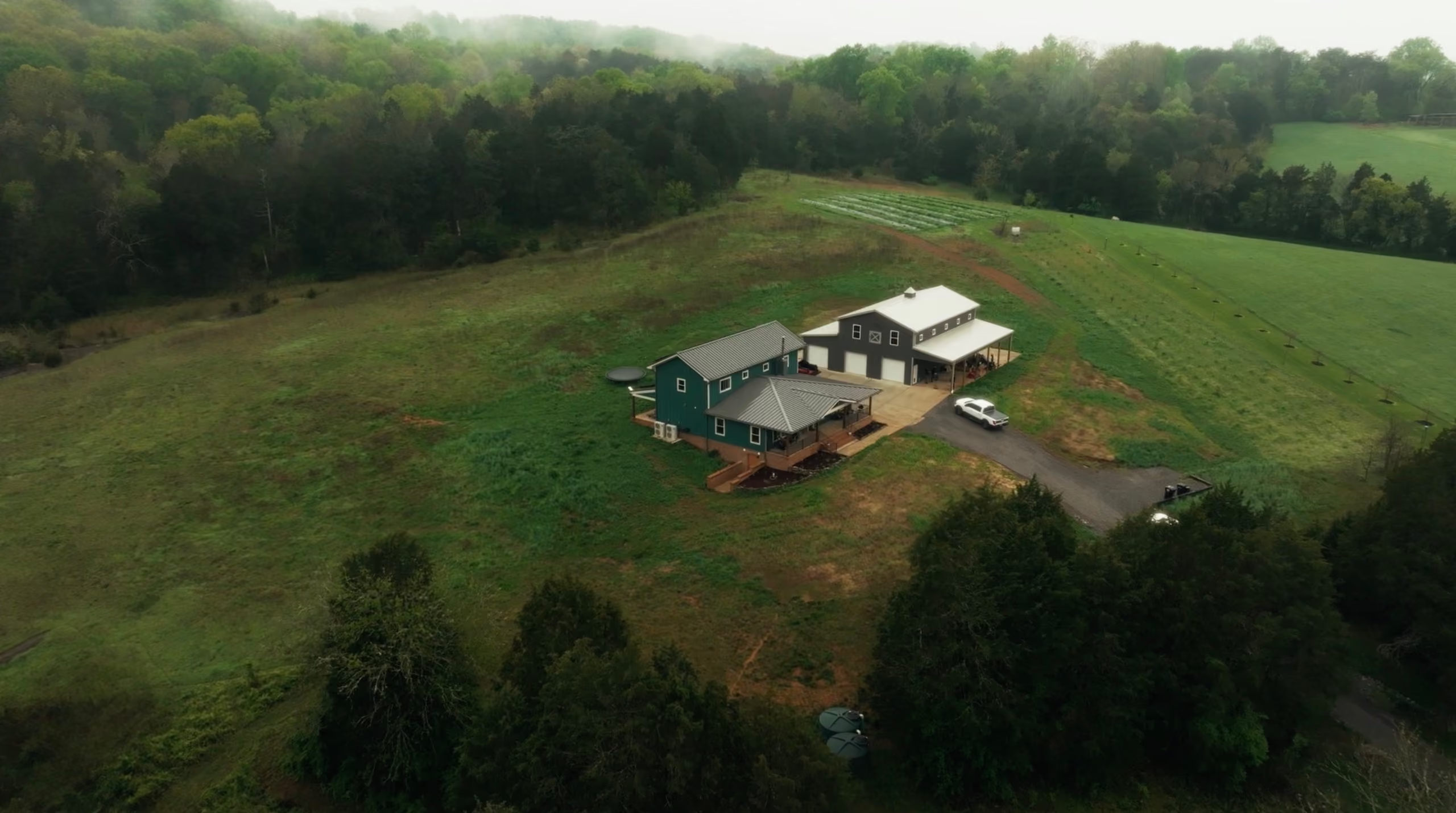
You bought the land. Maybe it's forty acres with a long view, maybe it's a lot at the end of a gravel road in the mountains. The build is underway. Then someone asks the question that stops everything: where's the water coming from?
PerfectWater has worked on water in Tennessee since 1997, and I've been building whole-home rainwater systems since 2012. I'll tell you up front: building a home on land without water is a far more solvable problem than most people think. It usually works out better than the homeowner feared walking in. Here's what's going on and what your real options are.
When the water problem shows up
People come to me in two situations. Some plan for rainwater from the start because they want it. Others find out the hard way, when the builder finally drills for water and comes up short.
I call that second one the uh-oh moment. It usually hits in the last 25% of the build, by the time the builder actually drills the well. By then the foundation is poured, the framing is up, and the construction loan has you on a schedule. Miss a stage and the whole timeline slides. It's a hard place to suddenly have no water, and it's where a lot of my calls come from.
Why does some land have no water?
After more than a decade of building rainwater systems across the region, I know the pattern. Water trouble shows up in pockets. You'll get one or two dry spots over a 5 to 25 square mile stretch in the rolling hills of Middle Tennessee, and that's it. You can have a neighbor with a great well a couple miles away and still drill a dry hole on your own lot.
The mountains are the other hot spot, especially in Western North Carolina. Up on those high developments, I often find very low production or no water at all. There may be water down at 1,500 or 2,000 feet, but nobody in their right mind wants to drill that deep, and the cost is the reason.
Is it cheaper to drill a deeper well?
When a well comes up short, the obvious move is to drill deeper. The catch is that every foot down makes everything more expensive.
A deep well needs a bigger pump, and a bigger pump pulls more power. It needs heavier wire, often more than a thousand feet of it, which alone can run a few thousand dollars before anything else gets installed. It needs more pipe, threaded together twenty feet at a time, all the way down. When I started out, drilling ran about $9 a foot. Lately we've heard quotes as high as $100 a foot. That's probably on the high end, but the direction isn't friendly, and well drillers in East Tennessee are booked six to eight months out.
So you might spend a small fortune, wait most of a year, and still not hit usable water. That's a rough bet when you have a build to finish.
Rainwater harvesting can be your main water supply
Here's the part that changes the whole conversation. Rainwater harvesting isn't a stopgap or a downgrade. It's a complete and one hundred percent legitimate primary water supply for a home.
For someone who thought they were sunk, it's a real turnaround. You go from the worst day of the project to walking away with a better deal than you ever expected. The only money truly wasted is whatever went into the dry hole. The water itself usually beats what a well would have given you, and our customers aren't running dry.
Will I run out of rainwater?
Fair question, and it's the first one most people ask. The answer comes down to sizing.
We size a system around how many people live in the home, and often around the number of bedrooms, since a house needs a water supply that matches its size when it comes time to sell. Most folks settle on about six weeks of drought protection under normal use, and we can build in more if you'd sleep better with it.
One family near Franklin ran their home on a 5,000-gallon system for thirteen years without running out. Through a bad drought years back, the only thing they did differently was take a single load of laundry to a relative's house at the very end of the dry spell. Our customers got through the recent Southeast drought without trouble. Every system includes a fill spout as a backstop, and we almost never hear that anyone has needed it.
Why building it in beats adding it later
If you're still under construction, you're in luck, because designing rainwater in from the start usually costs less than retrofitting it later.
While the house is open, the builder drops in the wall penetrations we need and the electrician runs our power, both quick jobs in the middle of everything else they're already doing. We excavate before the final grade and landscaping go in, back when it's still field dirt and there's no finished lawn to tear up and rebuild. On a retrofit, those same small tasks turn into real money: pulling wire from the main panel, cutting through finished drywall, redoing landscaping that's already in.
The system itself stays out of your way. The piping runs underground around the house, and the tanks can be buried, partly buried, or tucked into whatever corner the site allows, so you don't lose yard or sightlines to them.
Land people gave up on
There's a bigger payoff hiding in all this. Rainwater is turning dead lots into buildable ones.
People don't even believe it. In parts of Western North Carolina, my team and I have driven whole subdivisions that are already paved, some with curbs and underground power run partway up the slope, where rainwater is the only thing that makes the lots livable. For a buyer, that can mean landing a beautiful piece of property at a lower price because everyone else crossed it off, then making it work with the right water system.
About the water itself
People assume harvested rainwater must be a step down. It's the opposite. We run every drop through high-volume pre-filtration and keep the stored water clean, clear, and odor-free, so whatever treatment follows is light. A metal roof keeps it cleaner still. I call it nature's distiller in the sky. Look in the tank and you'll see straight to the bottom.
The short version
A homeowner with forty acres called me recently and put it simply: we don't want to drill a well, we're just going to do nothing but sole source right off the bat. More people are skipping the gamble and starting with rainwater on purpose.
If you just bought land you love and you're losing sleep over water, the answer in front of you is probably better than the one you were afraid of losing.
Frequently asked questions
Can you build a house without a well?Yes. A properly designed rainwater harvesting system can serve as the sole water supply for a full-time home, covering drinking, bathing, laundry, and everything else. We've been installing whole-home rainwater systems as the primary supply since 2012.
What do you do if you can't drill a well on your property?You have a real alternative. Rather than drilling deeper at rising cost with no guarantee of water, you collect and store rainwater from your roof. For most homes, that's enough to run the entire household year-round.
How much does it cost to drill a deeper well?It varies a lot by depth and geology. Drilling has climbed from around $9 a foot years ago to quotes as high as $100 a foot in some cases, and deeper wells also need larger pumps and heavier wire, which add thousands more. In much of East Tennessee, drillers are also booked months out.
Is rainwater harvesting enough for a whole house?For most homes, yes. We size each system to the household, typically with about six weeks of drought protection, and add a fill spout as a backstop. Our customers don't run out, even in drought years.
Will a rainwater system work for resale?A home needs a water supply that matches its size to sell well, which is exactly why we often size systems by bedroom count. A whole-home rainwater system is a real, permanent water supply, not a temporary fix.
Building on land without water, or thinking about it before you buy? Reach out for a free consultation. We'll walk the property and give you a straight answer.
Ready to Take Control of Your Water Supply?
Don’t wait for water shortages or unreliable sources to disrupt your life. With our Rainwater Harvesting systems, you can enjoy a sustainable, reliable, and completely self-sufficient water solution tailored to your home’s needs.